
HALIFAX, NOVA SCOTIA | CANADA B3H 4R2 | +1 (902) 494-2211

Degree Programs

The Department of Chemistry offers five main degree programs:

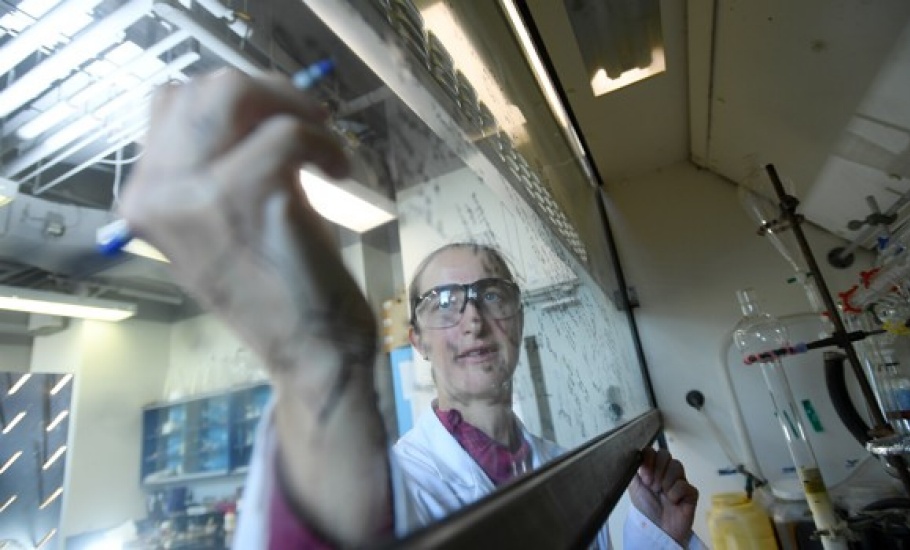
Graduating with a degree in chemistry will allow you to practice chemistry as a professional. (Abriel photo)

B.Sc. Honours in Chemistry (20 credit)

B.Sc. Major in Chemistry (20 credit)


B.Sc. Combined Honours (20 credit)


B.Sc. Double Major (20 credit)

B.Sc. with Concentration in Chemistry (15 credit)

In addition, students may elect to obtain a B.A. in Chemistry under the above programs, but must meet the general requirements of the Faculty of Arts and Social Sciences. Any of the 20-credit programs may also be combined with a program in Co-operative education. The 15-credit degree may also be combined with a Diploma in Engineering.

Students may combine a Chemistry degree with a Minor in certain other disciplines. As well, the Department of Chemistry offers certificates in Medicinal Chemistry and Materials Engineering. Consult the Academic Calendar or a Chemistry Advisor for details on minors and certificate programs.

For a complete set of requirements for the various degree programs, students are referred to the Academic Calendar (see College of Arts and Science Degree Requirements and Chemistry Degree Programs). However, for quick reference, the following guide may be used.

Quick Reference Guide to Undergraduate Programs in Chemistry


Chemistry Classes

Students entering Chemistry programs are required to complete a full credit of general chemistry with a laboratory at the first-year level. This requirement is met by General Chemistry (CHEM 1011/1012), Engineering Chemistry (CHEM 1021/1022), and the Dalhousie Integrated Science Program (SCIE 15XX).

Classes beyond the first year are divided into the traditional subdisciplines of Chemistry, as designated by the second digit of the class number: inorganic chemistry (X1XX), analytical chemistry (X2XX), physical chemistry (X3XX) and organic chemistry (X4XX). Classes in Biological Chemistry (X6XX) and interdisciplinary subjects (X5XX) are also offered, as well as research and seminar classes (X8XX and X9XX).

A more detailed description of individual Degree Programs is given below. Please consult with an advisor for more information. Advisor contact information is provided on the link for the quick reference guide above.

Honours in Chemistry

The BSc (Hons.) in Chemistry, which is accredited by the Canadian Society for Chemistry (CSC), is the most intensive program of study in chemistry, with the most demanding requirements for subject credits and grades. A minimum GPA of 3.00 in chemistry classes is required, and an honours research project must be completed. The honours degree is ideally suited to students who are planning to pursue graduate programs in Chemistry or closely related fields. Students who are planning to do an honours degree need to speak to a Chemistry advisor for program approval.


 Major in Chemistry

The BSc in Chemistry is also accredited by the CSC and is the core degree program for students whose main interest is chemistry. It is a rigorous course of study that involves broad exposure to all areas of Chemistry, with slightly less demanding class requirements and grade restrictions than the honours degree. Students may complete a research project if desired, but this is not required. The BSc Major is often suitable for admission to post-graduate study in Chemistry, depending on grades and class distribution.

 Combined Honours

The BSc with Combined Honours in Chemistry is suitable for students who want to combine Chemistry with a second discipline in a rigorous program of study. The other subject can generally be any discipline from the Faculty of Science or the Faculty of Arts and Social Sciences, or may be a program in Computer Science or Environment, Sustainability and Society. Chemistry may be the primary subject (the subject with the larger number of honours credits) or the secondary subject, and the requirements vary for each case. The specific requirements for the Combined Honours degree are generally less restrictive than a specialized Major or Honours degree, permitting the student more flexibility in choosing the most appropriate interdisciplinary program. The other subject may be chosen in a closely complementary field, such as Biology or Physics, or one which is more distinct, such as Economics or French. (Note that if the primary subject is from the Faculty of Arts and Social Sciences, the degree will be a BA.) The suitability of the Combined Honours degree depends on the objectives of the student. While it can provide the student with a more diverse background and a unique combination of skills, it may also diminish the specialization required for postgraduate studies. Students planning to do a Combined Honours degree need to have their academic program approved by advisors in both departments.

Double Major

Like the Combined Honours BSc, the Double Major allows students to diversify their studies over two disciplines, but with fewer constraints. The same combinations are permitted as for the Combined Honours degree, where one subject is the primary subject and the other is the secondary. Chemistry requirements differ in the two cases. The double major allows students to expand the components of their education and is well-suited to those interested in pursuing an education degree or entering professions that benefit from a broad-based background. As with the Combined Honours degree, however, the Double Major may limit post-graduate specialization.

The degree could provide a basis for a career as a technical representative for a company dealing with chemicals or scientific apparatus.

15-Credit BSc

The 15-credit BSc with a concentration in Chemistry is appropriate for students who do not wish to complete a conventional four year program. It is often chosen by students planning to enter a professional program following their studies. The 15-credit degree can also be completed in parallel with a Diploma in Engineering. Generally, this program is not recommended as it does not meet the standards of a conventional four-year degree and does not provide the qualifications for a professional chemist. It is possible, however, for students who obtain this degree to upgrade to a 20-credit major or honours degree with additional study.

Co-operative Education

Co-operative Education in Science (Science Co-op) is a program where academic study is combined with paid career-related work experience. Students undertake three or four work-terms throughout their academic study terms and graduate with a Bachelor of Science Co-op. Science Co-op enables students to apply their knowledge directly while providing them with work experience that assists in making educated career choices. Students normally apply to join Science Co-op before their second year of study. If accepted into the Science Co-op program, students are required to register for and attend the Science Co-op Seminar Series (SCIE 2800.00) in the fall term of the year they join. A limited number of students will be admitted into this program each year. Students must be eligible to work in Canada. The minimum GPA of 3.00 is required for admission to and continuation in the Co-op program. Students must apply before August 1, but should, however, register their intention to enter the program with the Chemistry Office in the Spring of their first year if possible. Registration details are available from the DalChem Co-op Academic Advisor or the Co-operative Education office. For more information, please see http://www.sciencecoop.dal.ca.